


Muscle growth depends on a chain of biological signals, and peptides sit right in the middle of that chain. These short chains of amino acids act as signaling molecules that talk to the pituitary gland, trigger natural hormone production, and influence how the body repairs tissue after strenuous training. Athletes, lifters, and anyone recovering from an injury have taken notice, which explains why peptides for muscle growth have become one of the most searched topics in sports medicine circles.
What Peptides Are and Why You Need to Understand Their Types
Peptides are short chains of amino acids, the building blocks that also form larger proteins in the body. Unlike anabolic steroids, which mimic testosterone and trigger rapid, broad hormonal effects, peptides stimulate specific biological processes without the same widespread impact on the body (Formblends, 2026). This distinction matters because peptides work through targeted signaling molecules rather than flooding the system with synthetic hormones, which is part of why many fitness and performance circles have taken notice of them for muscle growth and recovery.
Not all peptides work the same way, and understanding their types helps clarify realistic expectations. Growth hormone secretagogues, such as CJC-1295 and Ipamorelin, stimulate the pituitary gland to release the body’s own growth hormone rather than introducing synthetic growth hormone directly (Sigalos & Pastuszak, 2017). These growth peptides work by amplifying a natural pulse rather than forcing elevated GH levels artificially, which is part of why physicians monitor response closely rather than assuming every client will react the same way. Other peptides, like BPC-157 and TB-500, target tissue repair and inflammation rather than hormone signaling. Naturally occurring peptides already exist in the body and regulate biological processes such as digestion, immune response, and cellular repair, which is part of why researchers have investigated whether certain peptides for muscle can be used therapeutically under medical supervision.
How Peptides Can Help in Muscle Growth
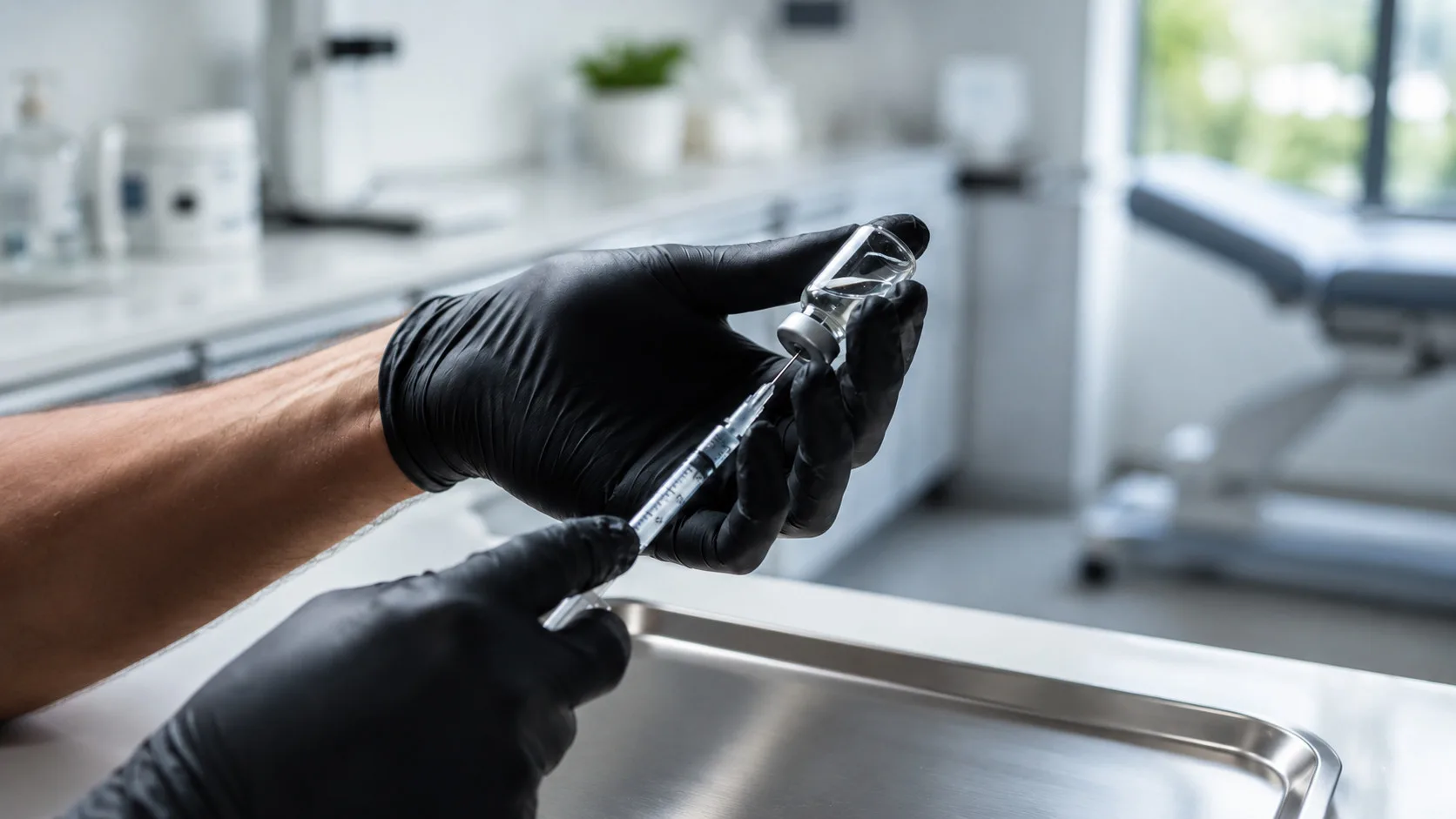
Most performance-oriented peptides do not build muscle directly the way anabolic steroids do. Instead, they support muscle growth and recovery by enhancing natural hormone production, improving muscle protein synthesis, and reducing muscle breakdown during intense training (Sigalos & Pastuszak, 2017). Growth hormone releasing hormone analogs like CJC-1295 stimulate the pituitary gland to release growth hormone in a pulsatile pattern that closely resembles natural secretion, which then raises insulin-like growth factor levels and supports lean muscle development over time (Teichman et al., 2006).
Clinical data from a dose-escalation trial in healthy adults found that a single subcutaneous dose of CJC-1295 produced growth hormone increases of two to ten times baseline for six days or longer, with insulin-like growth factor elevation lasting nine to eleven days (Teichman et al., 2006). Ipamorelin, often paired with CJC-1295, works as a growth hormone secretagogue that triggers a similar release without significantly increasing cortisol or prolactin. These two hormones can interfere with lean mass gains if elevated too often. Some commercial products marketed as growth peptides are sold as dietary supplements rather than prescription medication, which means they do not undergo the same quality control or dosing verification that a physician-prescribed peptide receives.
Peptides also support body composition indirectly. Some peptides have been shown to improve sleep quality, and since growth hormone release peaks during deep sleep, better rest can accelerate recovery and support fat metabolism alongside muscle building (Van Cauter et al., 2000). Research suggests certain peptides may increase lean body mass or improve recovery from strenuous exercise, though most of this evidence remains limited to small trials or animal studies rather than large-scale human research (Sigalos & Pastuszak, 2017).
Peptides for Muscle Growth and Recovery
Recovery matters just as much as growth when building lean muscle. BPC-157, a naturally occurring peptide derived from a protective protein in gastric juice, has been studied for its ability to accelerate healing of musculoskeletal injuries, including tendon, ligament, and muscle tears (Sikiric et al., 2020). Injury recovery remains one of the most researched applications for peptide therapy, since tendon and ligament injuries often heal more slowly than muscle tissue and can sideline training for months without proper support. Preclinical research shows that BPC-157 promotes tissue regeneration through mechanisms that involve blood vessel formation and reduced inflammation at injury sites (PMC, 2025).
TB-500, the synthetic version of thymosin beta-4, works differently. It promotes angiogenesis, the formation of new blood vessels, which accelerates tissue repair by improving blood flow to damaged areas (Smart et al., 2007). Clients using TB-500 for injury recovery report faster return to training compared to rest alone, though formal comparative trials in humans remain limited. Pairing growth hormone-releasing hormones with growth hormone-releasing peptides may work through growth hormone pathways more effectively than using either category alone (Bowers et al., 2007).
Medical Peptides for Muscle Growth and Body Composition
Peptide therapy differs meaningfully from steroid use in both mechanism and risk profile. Anabolic steroids mimic testosterone directly, leading to rapid muscle growth but carrying serious risks, including liver damage and hormone imbalances that can affect long-term health (Solimini et al., 2017). Steroid use has also been linked to insulin resistance and unfavorable shifts in body composition over time, which complicates weight management goals even when muscle mass increases in the short term. Peptides, by contrast, work through more targeted signaling and generally carry a lower risk of side effects compared to steroids, though they are not free of risk (Formblends, 2026).
A review of anabolic androgenic steroid hepatotoxicity found that prolonged use is associated with cholestatic liver injury, elevated liver enzymes, and in some cases hepatic tumors, particularly with oral formulations that undergo first-pass liver metabolism (Bond et al., 2018). Peptides do not carry this same hepatotoxic burden because they do not undergo the same metabolic pathway, but body composition scans and follow-up labs remain important regardless of which approach a client considers, since both categories affect fat metabolism and lean mass differently. An effective peptide protocol, when paired with proper training, can support gradual increases in muscle strength and lean muscle mass without the same downstream risk to liver function or insulin sensitivity associated with steroid use.
Medical peptides used for body composition, including CJC-1295, Ipamorelin, and growth hormone secretagogues, are typically administered via subcutaneous or intramuscular injections at doses that vary based on specific goals, whether that goal is muscle building, fat loss, or general recovery support (Sigalos & Pastuszak, 2017). Peptides work best alongside training and nutrition, not as a substitute for them. Proper nutrition, resistance training, and progressive overload remain the foundation of any muscle building or fat loss program, with peptides serving a supporting rather than primary role. Faster recovery between sessions can translate into more consistent workout performance over weeks and months, which often matters more for long-term strength gains than any single peptide’s direct effect on muscle tissue.
What Legalities and Current Studies Are Worth Knowing

Peptide regulation remains complicated, and this matters for anyone considering therapy. Many peptides are not FDA-approved for bodybuilding or muscle growth purposes and carry risks regarding purity and contamination, particularly when purchased online without medical oversight (Frier Levitt, 2026). Peptides are defined under the Biologics Price Competition and Innovation Act as chains shorter than 40 amino acids, while anything longer is classified as a biologic and faces stricter compounding restrictions (Frier Levitt, 2026).
Using unregulated peptides can lead to serious health issues, since peptides purchased outside a licensed medical channel may be contaminated, mislabeled, or sold at inconsistent concentrations (Frier Levitt, 2026). Some peptides are also prohibited in competitive sports and cannot be used by professional athletes, since organizations like the World Anti-Doping Agency classify certain growth hormone secretagogues as performance enhancement substances (WADA, 2023).
Further research is still needed on many fronts. Limited data exists on the long-term safety and effectiveness of many peptides in humans, and while anecdotal evidence supports the use of peptides for muscle growth, comprehensive clinical studies with large sample sizes remain lacking for several popular compounds, including BPC-157 and TB-500 (PMC, 2025). Animal studies and small human trials show promising signals for tissue healing and recovery, but most peptides used in fitness settings have not gone through the same rigorous testing that FDA-approved medications require. Consulting a healthcare provider before starting any peptide is not optional given this gap in long-term human data.
What’s the Process for Medical Peptides for Muscle Growth and Body Composition
Starting peptide therapy through a physician-guided process involves several structured steps that prioritize safety over speed.
Step One: Initial Health Consultation
A licensed doctor-ally reviews your health history, current training routine, and specific goals, whether that involves muscle recovery, lean muscle development, or general wellness. This step helps determine whether peptide therapy fits your situation or whether another approach makes more sense.
Step Two: Laboratory Testing and Body Composition Scans
Before any prescription is issued, baseline labs and body composition scans establish a starting point. This data helps the physician track whether therapy is producing measurable changes in lean mass, fat metabolism, or hormone levels over time.
Step Three: Personalized Peptide Selection
Based on your goals and lab results, the physician selects specific peptides suited to your case. Someone focused on muscle recovery after intense training might receive a different peptide than someone targeting tissue healing from an injury. Dosage and cycling vary based on these individual goals rather than following a one-size-fits-all protocol.
Step Four: Injection Training and Administration
Clients receive guidance on proper injection site rotation, since peptides are typically administered via subcutaneous or intramuscular injection depending on the specific compound. Correct technique reduces the risk of injection site irritation and supports consistent absorption.
Step Five: Ongoing Monitoring and Follow-Up Labs
Regular follow-up labs track progress and confirm that hormone levels, body composition, and overall health markers are moving in the right direction. Adjustments to dosage or peptide selection happen based on this ongoing data rather than a fixed timeline.
How TRT Colombia Is Part of This Process
TRT Colombia operates as a medical facilitator, connecting clients with licensed doctor-allies and partner clinics that offer peptide therapy alongside other hormone optimization services. The organization does not prescribe medication directly. All treatment decisions, including which specific peptides may be appropriate, rest with the licensed physician after a full evaluation.
Doctor-allies working with TRT Colombia review each client’s health questionnaire, medical history, and lab results before recommending any peptide protocol, which keeps treatment matched to individual goals rather than a generic template. This same evaluation process applies whether the goal is muscle growth and recovery, general wellness, or addressing symptoms tied to declining natural hormone production with age.
Consulting a doctor for safe peptide usage and monitoring remains the central principle behind this entire process. Given how many peptides remain unregulated and how limited long-term safety data still is, working through vetted doctor-allies rather than purchasing unregulated peptides online reduces the risk of contamination, mislabeling, or inappropriate dosing that can lead to adverse effects.
Frequently Asked Questions
Can peptides alone build muscle without training?
No peptide replaces resistance training or proper nutrition. Most performance-oriented peptides support recovery, reduce muscle breakdown, and assist hormonal signaling, but muscle growth still depends on progressive overload and adequate protein intake.
Are peptides safer than anabolic steroids?
Peptides generally carry a lower risk of severe side effects like liver damage or major hormone disruption because they target specific pathways rather than flooding the body with synthetic testosterone. That said, unregulated peptides still carry contamination and dosing risks that require medical oversight to manage properly.
How are peptides administered?
Most peptides used for muscle recovery or growth hormone support are given through subcutaneous or intramuscular injections, typically on a schedule determined by a physician based on the client’s goals and response.
Can competitive athletes use these peptides?
No. Growth hormone releasing peptides, growth hormone releasing hormones, BPC-157, and TB-500 are prohibited substances under the World Anti-Doping Agency’s rules, and professional athletes face sanctions for use even with a valid medical rationale outside of a therapeutic use exemption.
Does TRT Colombia prescribe peptides directly?
TRT Colombia does not prescribe or administer treatment. The organization coordinates access to licensed physicians and partner clinics in Colombia who evaluate each client and determine, following that evaluation, whether a peptide protocol is medically appropriate.
References
Bond, P., Llewellyn, W., & Van Mol, P. (2018). Anabolic androgenic steroid-induced hepatotoxicity. Medical Hypotheses, 118, 84-88. https://doi.org/10.1016/j.mehy.2018.06.024
Bowers, C. Y., Laferrère, B., Hurley, D. L., & Veldhuis, J. D. (2007). The role of growth hormone secretagogues and ghrelin in feeding and body composition. In P. A. Donohoue (Ed.), Energy metabolism and obesity (pp. 143-158). Humana Press. https://doi.org/10.1007/978-1-60327-139-4_8
Formblends. (2026). Anabolic steroids vs peptides: Honest comparison. https://formblends.com/articles/peptide-hub/compare-anabolic-steroids-vs-peptides
Frier Levitt. (2026). Regulatory status of peptide compounding in 2025. https://www.frierlevitt.com/articles/regulatory-status-of-peptide-compounding-in-2025/
PMC. (2025). Emerging use of BPC-157 in orthopaedic sports medicine. PMC12313605. https://pmc.ncbi.nlm.nih.gov/articles/PMC12313605/
Sigalos, J. T., & Pastuszak, A. W. (2017). The safety and efficacy of growth hormone secretagogues. Sexual Medicine Reviews, 6(1), 45-53. https://doi.org/10.1016/j.sxmr.2017.02.004
Sikiric, P., Seiwerth, S., Rucman, R., Kolenc, D., Vuletic, L. B., Drmic, D., Grgic, T., Strbe, S., Zukanovic, G., Crvenkovic, D., Madzarac, G., Rukavina, I., Sucic, M., Zivanovic-Posilovic, G., Bariba, C., Balenovic, D., Udovicic, M., Stancic-Rokotov, D., Berkopic, L., Kokot, A., & Vlainic, J. (2020). Stable gastric pentadecapeptide BPC 157: Novel therapy in gastrointestinal tract. Current Pharmaceutical Design, 24(18), 1990-2001. https://doi.org/10.2174/138161211796196954
Smart, N., Rossdeutsch, A., & Riley, P. R. (2007). Thymosin beta4 and angiogenesis: Modes of action and therapeutic potential. Angiogenesis, 10(4), 229-241. https://doi.org/10.1007/s10456-007-9077-x
Solimini, R., Rotolo, M. C., Mastrobattista, L., Mancinelli, R., Ceci, M., Margiotta, A., Nembrini, L., Pichini, S., & Pacifici, R. (2017). Hepatotoxicity associated with illicit use of anabolic androgenic steroids in doping. European Review for Medical and Pharmacological Sciences, 21(1, Suppl.), 7-16.
Teichman, S. L., Neale, A., Lawrence, B., Gagnon, C., Castaigne, J. P., & Bhatt, R. (2006). Prolonged stimulation of growth hormone and insulin-like growth factor I secretion by CJC-1295, a long-acting analog of GH-releasing hormone, in healthy adults. Journal of Clinical Endocrinology & Metabolism, 91(3), 799-805. https://doi.org/10.1210/jc.2005-1536
Van Cauter, E., Plat, L., & Copinschi, G. (2000). Interrelations between sleep and the somatotropic axis. Sleep, 23(6), 1-9.
World Anti-Doping Agency. (2023). Prohibited list 2023. https://www.wada-ama.org/


